How can SWIF Rack impact the financial outlook of a project?
In Short: More predictable cash flow. Lower lifecycle costs. Higher energy production.
SWIF Rack improves project economics on both sides of the equation—reducing lifecycle costs and increasing energy production.
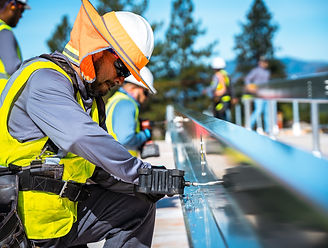
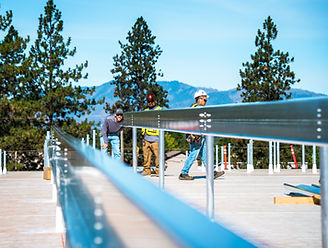
The SWIF TEN Racking System is built on a simple premise: the roof comes first. By elevating solar panels above the membrane without cross-bracing or obstructive framework, SWIF provides full, continuous access to the roof surface while the system remains operational. Roofing crews can inspect, repair, or even complete a full membrane replacement beneath a live array—without removing a single panel.
This eliminates one of the largest financial risks in rooftop solar:
-
No remove-and-reinstall costs
-
No system downtime
-
No disruption to revenue generation
-
No unplanned capital events that erode ROI
At the same time, elevation doesn’t just protect the roof—it can increase energy output.
Bifacial modules generate power from both sides, capturing reflected light (albedo) from the roof below. Conventional low-profile, ballasted systems sit close to the membrane, limiting this effect. SWIF’s elevated architecture is purpose-built to maximize rear-side production by increasing clearance, airflow, and reflective exposure. This can result in up to ~20% more energy from the same number of panels.
Over the life of the system, that production gain translates directly into additional revenue—without adding panels, weight, or system complexity.
-
More kWh per panel
-
Higher annual energy yield
-
Improved project IRR and payback
-
No additional roof penetrations or structural load
An additional upside includes potential insurance savings due to reduced fire risk and improved system access.